The Spiritual Watch
Scripture referenced in this chapter 72
- Genesis 3
- Numbers 5
- Deuteronomy 13
- Deuteronomy 26
- Deuteronomy 32
- Judges 16
- Judges 19
- 2 Samuel 6
- 2 Samuel 11
- 2 Kings 8
- 2 Kings 17
- 2 Chronicles 15
- 2 Chronicles 25
- 2 Chronicles 29
- Job 1
- Job 2
- Job 31
- Psalms 4
- Psalms 13
- Psalms 16
- Psalms 39
- Psalms 57
- Psalms 106
- Psalms 108
- Psalms 119
- Psalms 121
- Proverbs 4
- Proverbs 10
- Proverbs 16
- Proverbs 23
- Proverbs 24
- Proverbs 28
- Proverbs 30
- Song of Solomon 1
- Song of Solomon 5
- Song of Solomon 6
- Isaiah 29
- Isaiah 57
- Jeremiah 4
- Jeremiah 17
- Hosea 4
- Hosea 6
- Habakkuk 2
- Zephaniah 3
- Malachi 3
- Matthew 4
- Matthew 13
- Matthew 16
- Matthew 17
- Matthew 21
- Mark 6
- Luke 22
- John 2
- John 12
- Romans 13
- Romans 15
- 1 Corinthians 3
- 1 Corinthians 9
- 2 Corinthians 2
- 2 Corinthians 7
- 2 Corinthians 13
- Ephesians 3
- Ephesians 4
- Ephesians 5
- Ephesians 6
- Philippians 4
- Colossians 3
- 1 Peter 1
- 1 Peter 3
- 1 Peter 5
- 1 John 2
- 1 John 3
Proverbs 4:23. Keep your heart with all diligence, for out of it are the issues of life.
This book of Proverbs is full of many divine aphorisms; other parts of scripture are like a golden chain where the verses are linked together by coherence, but this book is like a heap of gold rings — many precious sentences lie scattered up and down in it, as so many jewels or sparkling diamonds. Solomon was the wisest of kings; as his kingdom was a map of the world's glory, so his head was an epitome of the world's wisdom. He was endued with a divine Spirit; while he wrote, the Holy Ghost dictated; and surely among all his golden sentences, none is more weighty and important than this: keep your heart with all keeping, for out of it are the issues of life. The text is about matter of life and death; I shall first explain, then apply.
Keep: the Hebrew word to keep has various significations.
Sometimes it signifies to arm or fence; a stroke at the heart kills — fence your heart.
Sometimes it signifies to take care of a thing that it be not lost, as one would take care of a piece of plate that it not be taken away.
Sometimes it signifies to keep in safe custody; so keep your heart — lock it up safe, that it may be forthcoming when God calls for it.
Your heart: the heart is taken diversely in scripture — sometimes for the vital part (Judges 19:5), for the soul (Deuteronomy 13:3), for the mind (Proverbs 10:8), for the conscience (1 John 3:20), for the will and affections (Psalm 119:36). I shall take it in its full latitude, for the whole soul with all its noble faculties; this is the deposit or charge every man is entrusted with — the heart.
With all diligence: the original carries it with all keeping; the Hebrew word signifies to keep with watch and ward — a Christian is to set a continual guard about his heart. Some read: keep your heart above all keeping; nothing requires such strict custody; a Christian's heart must ever be in his eye.
For out of it are the issues of life: as the heart is the fountain of life — if the heart lives, the body lives; if the heart be touched, death follows. So the soul is a spiritual fountain; from this spring-head flow the streams either of salvation or damnation.
In the words there is:
A duty: keep your heart.
The manner: with all diligence.
The reason: for out of it are the issues of life.
Doctrine: it must be a Christian's great care with all keeping to keep his heart. We are to keep our eyes — Job set a watch there (Job 31:1): I made a covenant with my eyes. We are to keep our lips — David bridled his tongue (Psalm 39:1): I will keep my mouth as with a bridle. But especially we are to look to our hearts: keep your heart with all keeping. The heart, like Dinah, will be gadding abroad, and it seldom returns home but it is defiled. It was the saying of a heathen: I never come home with such good desires as I went out with. The serpent, when any danger is near, keeps his head; and to preserve his head, will expose his whole body to injury; so a wise Christian should especially keep his heart — he should adventure his skin to keep a wound from his heart. I shall show that the heart must be kept: 1. With all kinds of keeping. 2. At all times. 3. The reasons enforcing.
The heart must be kept with all kinds of keeping.
Keep your heart as you would keep a temple; the temple was a hallowed place set apart for God's worship; so the heart is Augustissimum Dei Templum — the temple of God (1 Corinthians 3:16). This heart-temple must be kept pure and holy; no filth must lie here; sweep the dust out of the temple. The vessels of the temple were cleansed (2 Chronicles 29:15); thus the memory, affections, conscience — these temple-vessels must be cleansed (2 Corinthians 7:1). Christ whipped the buyers and sellers out of the temple (John 2); the cares of the world will be crowding into the heart — get a whip made of the threatenings of the law and drive these money-changers out of the temple of your heart. Let not God's temple be made an exchange; the temple had a fire burning on the altar — take heed of strange fire; keep the fire of zeal and devotion flaming upon the altar of your heart; do temple-work, offer up the sacrifice of a broken heart. When the heart is Dei sacrarium — a consecrated place, an holy of holies — God will walk there. Many a man's heart is a pest-house, a bedlam, being polluted with sin — this is to put swine into God's room, this is to let the devil come into God's temple. David's heart was a temple dedicated (Psalm 119:38).
Keep your heart as you would keep a treasure; a man who has a great treasure will keep it with lock and bolt, that it not be stolen. Christian, you carry a precious treasure about you — a heart; the devil and the world would rob you of this jewel. Oh keep your heart as you would keep your life; few know the value of their hearts, therefore they prefer other things. Keep your heart as a treasure.
Keep your heart as you would keep a garden; your heart is a garden — weed sin out of your heart. Among the flowers of the Spirit weeds will be growing: the weeds of pride, malice, covetousness (these grow without planting); therefore every day be weeding your heart by prayer, examination, and repentance.
Weeds hinder the herbs and flowers from growing; the weeds of corruption hinder the growth of grace; where the weed of unbelief grows, it hinders the flower of faith from growing.
Weeds spoil the walks; Christ will not walk in a heart overgrown with weeds and briars. Christ was sometimes among the lilies (Song of Solomon 6:3), never among the thistles. Poor sinner, you complain that you have no communion with God; a time was when God made himself known to you, but now he has grown strange. This is the reason: sin has spoiled Christ's walks; your heart lies like the field of the sluggard (Proverbs 24:30). Oh weed your heart daily; let not your heart be a thicket for Satan.
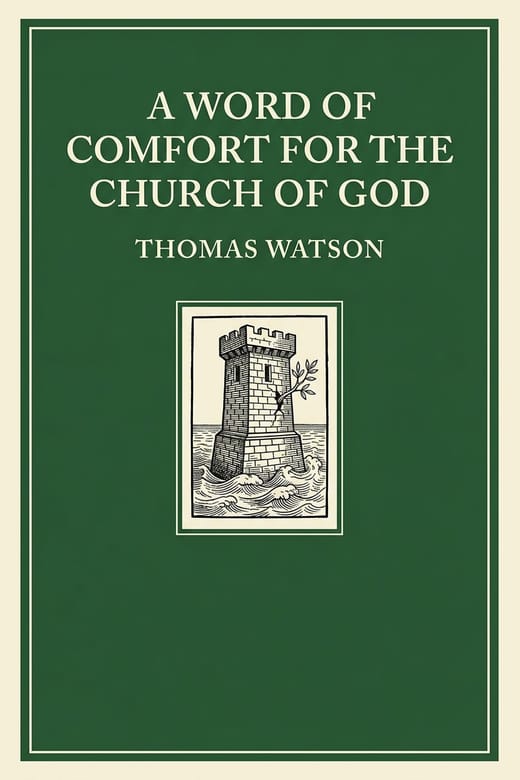
Keep your heart as you would keep a garrison; the heart of man is a garrison or fort-royal, and this garrison is besieged — the devil shoots his fiery darts of temptation. Now keep your heart as a tower or castle.
Keep close sentinel in your heart (Habakkuk 2:1): I will stand upon my watch and set me upon the tower. Discover where Satan labors to make a breach, what grace he most shoots at, and there set a double guard and fortify.
Make use of all your spiritual ammunition — meditation and prayer. Prayer is the great ordnance; discharge this cannon and be sure to put the bullet of faith in (Matthew 21:22; 1 Peter 5:9). If the devil takes the garrison by storm, it will be sad; it is easier letting Satan in than getting him out. If the devil gets the garrison of your heart, you are his slave — and remember he gives no quarter.
Keep your heart as you would keep a prisoner; the heart is guilty and is ready ever and anon to break prison — we must lay bolts and fetters upon it. A prisoner in the jail may promise fair that he will not stir, but when he sees an opportunity and you do not watch him, he will file off his fetters and be gone. So the heart promises fair that it will keep from such sins, but if you are not careful it will steal out to vanity. Say to your heart as John the Baptist said to Herod (Mark 6:18): it is not lawful for you to have your brother's wife. So say to your heart: it is not lawful for you to meddle with the forbidden fruit; lay the commands of God upon your heart. Let it be kept close prisoner.
Keep your heart as you would keep a watch; the heart will be unwinding toward the earth, therefore wind it up every morning and evening by prayer. The motion of a watch is not constant — sometimes faster, sometimes slower; so set this spiritual watch by the sun-dial of the Word.
The heart must be kept at all times.
Keep your heart when you are alone; it was Satan's subtlety to set upon Eve when she was alone and less able to resist. He is like a cunning suitor who woos the daughter when her parents are from home; the devil breaks over the hedge commonly where it is weakest. Privacy and retirement is good; had a Christian a fruitful heart, what sweet thoughts might he have of God when alone! But alas, by reason of innate corruption, how many vain, proud, and impure thoughts will be stealing into our hearts when we are most secluded from the world! The fowls will be coming at the sacrifice; the devil will be shooting in his balls of wildfire, and when we least suspect him will be treating with us to deliver up the castle of our heart to him.
Keep your heart when you are in company; vain company is the bait by which Satan is angling for the heart. In the law, he who touched a dead body was unclean (Numbers 5:2); the heart is apt to be defiled by being among those who are dead in sin. It is easy to catch a disease in company. Since the fall, our hearts are ready to pollute and infect one another — being like that withered vine the poet speaks of, which took away the fresh color and sap from its neighbor vine. If you mingle bright and rusty metal together, the rusty will not be made bright, but the bright will become rusty; so an evil companion who is rusted with sin rubs ever and anon some of his unholy rust upon a man brightened with grace. Nay, Christians, look to your hearts even in good company; those who may have some good thing in them, yet there may be much levity of discourse — and if no filth or scum, yet froth may boil up; these are most dangerous because less suspicious. Who would suspect the plague in perfumed linen? The devil does that hurt sometimes by a good instrument which he cannot do by a bad; he hands over a temptation by such — he tempted Christ by an apostle; the devil once crept into the serpent, here into the dove; but Christ spied his cloven foot (Matthew 16:23): get behind me, Satan. How watchful had we need be in company!
Keep your heart especially after good duties; when Christ had been praying and fasting, then the devil came and tempted him (Matthew 4:2-3). When we have been most enlarged in our services, now will Satan tempt to pride and security. Many Christians' hearts, like bows, stand unbent after shootings — they are apt to grow more remiss, as if duty were a sufficient spell and antidote against temptation. Do we not know Satan always lies at the catch? He is more mad against us after duty; those prayers which appease God, incense Satan. And if we lay down our weapons, he will fall on and wound us. After David's victory over the Assyrians he grew lustful and defiled Bathsheba (2 Samuel 11:4); after we have gotten a victory over Satan in duty, now let us fear lest our hearts give us the slip. When God drove Adam out of the garden, he placed a flaming sword at the east of it to keep the tree of life (Genesis 3); when we have cast out the devil by prayer and fasting, let us set a strong guard about our hearts that the enemy does not make a re-entry.
Keep your heart in time of adversity; the devil makes use of all winds to toss the soul and make it suffer shipwreck. Adversity has its temptations; not more ships than souls have been cast away in a storm. In adversity the devil tempts to atheism and desperation. Satan used Job's wife as a ladder by which he would have scaled the impregnable tower of Job's faith (Job 2:9): do you still retain your integrity? A cutting kind of speech; as if the devil had said, God has pulled down your hedge, he has smitten you in your children — and are you so senseless as still to serve and worship God? What have you got by his service? Where are your earnings? What have you to show but your boils? Throw off religion, curse God, and die! Satan's physic always poisons (Malachi 3:14): you have said it is vain to serve God; and what profit is it that we have kept his ordinance? We have mourned and fasted, and have almost fasted away all we have — we will fast no longer. When a man's estate is low and his spirit troubled, now Satan begins to throw in his angle. Oftentimes Satan makes use of poverty to put a man upon indirect courses; Agur feared his heart in poverty (Proverbs 30:8-9). Oh keep your heart in adversity; beware of taking the forbidden fruit.
Keep your heart in time of prosperity; the moon, the fuller it is, the more remote from the sun, and often the more full a man is of the world, the further his heart is from God. Deuteronomy 32:15: Jeshurun waxed fat and kicked; it is hard to abound in prosperity and not abound in sin. A full cup is hardly carried without spilling; the trees are never more in danger of the wind than when they blossom. Pride, idleness, and luxury are the three daughters bred of plenty. Samson fell asleep in Delilah's lap; millions in the lap of prosperity have slept the sleep of death. Agur prayed: give me not riches (Proverbs 30:8); he knew his heart would be ready to run wild; the world's golden apple bewitches. When God sets a hedge of prosperity about us, we had need set a hedge of caution and circumspection.
The next thing is, why we must be so careful about keeping our hearts? The reasons are:
Because the heart is a slippery piece (Jeremiah 17:9): the heart is deceitful above all things; in the Hebrew it is — the heart is a Jacob above all things — the heart is a supplanter. If we are not very cautious and watchful, our hearts will put a cheat upon us. There is deceit in coin, in friends, in books; but the heart has an art of deceiving beyond all — it is a desperate impostor; the way of the heart is like a serpent upon a rock. O the pleats and folds, the subtleties and labyrinths of a self-deceiving heart! Let us a little trace the heart in its fallacies and stratagems, and see if there be not reason to lie sentinel continually and set a strong guard about it. The heart will deceive us about things sinful, lawful, and religious.
The heart will deceive us about things sinful.
The heart will tell us sin is but small, and being small, it is venial.
The heart will apologize for sin, masking over bad transactions with golden pretences.
The heart will tell a man he may keep his sin and keep his religion too (2 Kings 17:33): they feared the Lord and served their own gods. The heart will secretly suggest that as long as a man goes to church and gives alms, he may secretly indulge corruption — as if duty gave a man a patent and license to sin.
The heart will quote scripture to justify sin (1 Corinthians 9:20, 22): to the Jews I became as a Jew, that I might gain the Jews. O subtle heart, that can find out scripture to damn itself! Though Paul in things indifferent would conform to others to save their souls, yet he would not violate a law or deny an article of his creed. If the heart is so treacherous — always more ready to excuse sin than examine it — what care and circumspection should we use!
The heart will deceive us about things lawful in two cases.
It is lawful to endeavor to preserve our credit; a good name is a precious ointment. But under a pretense of preserving the name, the heart is ready to tempt a man to self-seeking (John 12:43): they loved the praise of men more than the praise of God.
It is lawful to take comfort in estate and relations (Deuteronomy 26:11). But the heart will be ready here to overshoot; how often is the wife and child laid in God's room, with the full stream of affection running to the creature and scarce a drop of love to Christ. This is the deceit of the heart — it makes us offend most in lawful things; more are killed with wine than poison; when we overdo, we undo.
The heart will deceive us about things religious.
1. Our duties. 2. Our graces.
Our duties. The heart will tell us it is enough to come to Word and Sacrament, though the affections are not at all wrought upon; this is like the salamander, which lives in the fire but (as naturalists say) is never the hotter. Will this be any plea at God's bar — to tell the Lord how many sermons you have heard? Surely it will be the bringing of Uriah's letter; it will be an evidence against you. How subtle is the heart to plot its own death, and bring a man to hell in the way of duty!
Our graces. The heart is like a flattering glass that would make the hypocrite look fair; the foolish virgins thought they had oil. Many strongly conceive they have grace, but have none. The hypocrite's knowledge is no better than ignorance (1 John 2:4); he has illumination but not assimilation — he is not made like Christ. The hypocrite's faith is fancy; he believes, but his heart is not purified; he pretends to trust God in greater matters but dares not trust him in lesser; he will trust God with his soul, but not with his estate.
Well, if the heart be thus deceitful, what need have we with all keeping to keep the heart! Do with the heart as with a cheater; we will trust a cheater no further than we can see him; the heart is a grand cheater — it will supplant and cozen. Try it, but do not trust it (Proverbs 28:26): he that trusts in his own heart is a fool.
We must keep the heart with watch and ward, because it is not only false but fickle. God complains of Israel that their goodness was as the early dew (Hosea 6:4); the sun arises and the dew vanishes. The heart sometimes seems to be in a good frame, but it soon alters; set the water on the fire, it boils; set it in the open air, it freezes. Those good affections which boil in the church often freeze in the shop. One day a Christian is quick and lively in prayer, another day like the disciples — heavy and sleeping (Luke 22:45). At one time a Christian is like David when he danced before the ark with all his might (2 Samuel 6:14); at another time like Samson when his hair was shaved and his strength went from him (Judges 16:19). When gold has been made pure in the fire it remains pure; but it is not so with the heart — when it has been purified in an ordinance, it does not remain pure; it gathers new soil and dross. The heart is one day humble, next day proud; one day meek, next day passionate; it is with the heart as with a sick man's pulse, which alters almost every quarter of an hour. The heart being so full of variation and inconstancy, it is needful to keep the heart with all keeping; the heart, like a viol, will soon be out of tune — therefore we must often screw up the strings, that we may make melody in our heart to the Lord (Ephesians 5:19).
The heart must especially be looked to and watched because it is the fountain of all our actions and purposes; the heart does either sweeten or poison all we do. The heart is the spring which makes the current of our life run either pure or muddy; the heart is the throne either of sin or grace. If the root be sour, no sweet fruit can grow upon it; so if there be a root of bitterness springing in the heart, our services cannot give a sweet relish. As in the natural body the heart is the fountain of life — if the heart lives, the whole body lives; if the heart be tainted and poisoned, the body dies. So it is in a spiritual sense; if the inner man of the heart be holy, then the thoughts and actions are holy. In religion the heart is all; we judge of men's hearts by their actions, but God judges of men's actions by their hearts. Amaziah did that which was right in the sight of the Lord, but not with a perfect heart (2 Chronicles 25:2); but of Asa it is said, his heart was perfect all his days (2 Chronicles 15:17). It is the heart that gives the denomination to a thing; now if the heart is the spring which makes our actions good or bad, then the heart is chiefly to be watched; preserve the spring pure — keep your heart with all diligence.
Use 1. This shows a difference between the godly and the wicked; the hypocrite looks most to externals — he keeps his actions from blotting, he sets a watch before his lips. The godly man sets a watch before his heart; his main work lies within doors; he sees the first ebullitions and risings of sin and grieves for them; he labors to set his heart right. The heart is the altar which sanctifies the gift.
Use 2. Reproof. If we are to keep our hearts with all keeping, then it reproves four sorts of persons.
Such as have no care at all about their hearts; they will have a care to keep their land that it be not mortgaged, but no care to keep their hearts. Salvation and blessedness depend upon the keeping of the heart, yet how few mind their hearts — they let the devil get into their hearts. The shepherd keeps his flock, the physician keeps his receipts, the lawyer keeps his evidences, the merchant keeps his wares, the covetous man keeps his gold; but few keep their hearts.
Why do not men keep their hearts?
Because they study not the preciousness of them; what a treasure is the heart? It is divinely ennobled, it is capable of glory; but few know the worth of this jewel.
Men keep not their hearts because they are taken up in keeping other things (Song of Solomon 1:6): my own vineyard have I not kept. Many a man may say: I have been cumbered about the world, I have been keeping my estate, tending my lusts, but my own heart has been neglected — my own vineyard have I not kept. Judas was keeping the bag when he should have kept his heart.
Men keep not their hearts because they keep themselves in sloth; to keep the heart requires diligence, and few are willing to put themselves to the trouble. But should not a merchant keep his books of account because he finds some trouble in it?
Some think their hearts are so good that they need not spend time about them to keep them. Many a bold sinner is presumptuously confident of heaven; he thinks he wants nothing but taking possession. Hence it is he never looks into his heart or searches his evidences till it be too late.
It reproves those who, when they should be keeping their hearts, fall asleep (Matthew 13:25): while men slept, the enemy came and sowed tares. When men are asleep and neglect their spiritual watch, the devil comes and sows poisonful seeds in their hearts — seeds of malice, pride, lust. They say when the dragon is asleep, a jewel is taken out of his head; so the devil takes away this jewel of the heart while men sleep in security. It is death for a soldier to fall asleep upon his guard.
It reproves those who, instead of keeping their hearts, have suffered them to be stolen away. The love of the world has stolen away men's hearts; we may make a hue and cry after hearts. Satan catches men's hearts with a golden bait. This is the reason why preaching the Word does so little good; ministers preach to men's ears, but the world has stolen away their hearts.
It reproves those who keep half of their heart but not all; they have affections to good things, but let out some rooms of their heart to sin. Herod did many things, but he let out one room of his heart to the devil — he lived in incest. The true mother would not have the child divided; God will not endure to have the heart divided — he will have the whole heart kept for him.
Use 3. It exhorts Christians to keep their hearts: merchants complain of losses at sea; but whatever we lose, if we can keep our hearts we shall do well enough. Keep your heart with all diligence. This is, I confess, a hard work; Elijah found it easier to shut heaven by prayer than to shut his heart from evil thoughts. But this is the work every good Christian must set upon — the keeping of his heart.
But if my heart be evil, must I keep it?
No — cast away the evil of it, and keep that which is good. As when we candy fruit, we pare off the skin, cut out the core and rotten parts, and preserve that which is best; so do with your heart. What is evil in it cast away; what is good preserve. If your heart be hard, cast away the stone — keep it soft; if hypocritical, cut out the rotten and keep that which is sound. Separate between the precious and the vile; the sin in your heart throw away, the grace keep and cherish. In a word, do with your heart as they in the parable did with the fish (Matthew 13:48): they gathered the good into vessels, but cast the bad away.
This is the great exhortation — heart-custody; sinners, look to your hearts; let not your hearts be bewitched and stolen away with the pleasures of the world (Hosea 4:11): whoredom and wine take away the heart; many have drowned their hearts in wine. Clement of Alexandria reports of a certain fish that has not a heart distinguished from the belly as other fishes, but has the heart in the belly — an emblem of epicures, whose heart is in their belly.
What is the holy frame and posture in which I should keep my heart?
Keep your heart awake (Song of Solomon 5:2): my heart wakes (Psalm 108:2): I myself will awake early. Though we have been sluggish, yet now it is high time to awake out of sleep (Romans 13:11). Take heed of sleeping in ignorance, impenitency, and security; the heart is naturally asleep; sin may be compared to sleep.
A man that is asleep has his senses tied up; so a sinner whose heart is asleep in sin has his spiritual senses taken away — he is not sensible of sin or wrath (Ephesians 4:19). He is going to hell, but knows it not; he laughs in his sleep.
Though in sleep the senses are bound, yet the fancy is let loose; the man dreams he is at a banquet (Isaiah 29:8). So when the heart of a sinner is asleep in sin, yet his fancy is quick; he fancies that he is an heir of the promise, that God loves him — his fancy is let loose.
Sleep hinders from action; he that is asleep cannot work; so a sinner fallen asleep in sin cannot work out his salvation.
A man asleep is in danger to be robbed — his money or jewels may be taken away; so while the sinner is asleep he may be robbed of his soul. Oh therefore keep your heart awake; let the judgments of God on sinners be as an alarm to awaken you. Make that prayer of David (Psalm 13:3): lighten my eyes, that I sleep not the sleep of death.
Keep your heart jealous; towards others exercise charity, towards yourself jealousy. The better the heart is, the more suspicious; Satan has a party within us — the heart is not true to itself, therefore it needs excubation and caution. Little did Hazael think what was in his heart (2 Kings 8:13). Had one come to Noah and said: Noah, you will be drunk shortly, he would have been ready to have defied him. There is all sin seminally in the heart; where will not the heart run if we do not guard it? It will run to idolatry, atheism, incest. Be ever jealous; jealousy breeds vigilance, and vigilance safety. Let your heart be ever in your eye; keep it in with the curb-bit of mortification.
Keep your heart serious; take heed of a light heart (Zephaniah 3:11): his prophets are light. The heart of the wicked is vain, and in this sense is said to be little worth (Proverbs 10:20). If you put a feather in the scale, it weighs nothing; so feathery is the heart of a sinner — vanity swims on the top and deceit lies at the bottom. A light heart is like a ship without ballast — it soon overturns; a vain heart will be unstable; light things are blown every way. A flashy Christian is not broken for sin; sin seldom lies heavy on a light heart. Keep the heart serious; fix it upon God (Psalm 57:7): O God, my heart is fixed. Grace consolidates the heart and keeps it from floating in levity; poise your heart with the thoughts of hell and judgment.
Keep your heart humble (1 Peter 5:5). That is the best frame of heart which fits a man for God's presence; the humble heart is the valley where God delights to walk, the house where he will take up his residence (Isaiah 57). The humble heart has a low esteem of itself and a high esteem of others (Philippians 4:3). The more humble the heart is, the more fertile in grace; those meadows which lie low are the richest grounds. Keep your heart humble; view your own wants and others' perfections. The impostume of pride kills; the eagle lifts up the tortoise into the air and then throws it down upon a rock and breaks it — so the devil lifts the heart up in pride and so destroys it.
Keep your heart sublime (Colossians 3:1-2): seek those things which are above. Keep down your heart with the weight of humility, yet mount it up with the wing of heavenly-mindedness. When the heart is touched with the loadstone of the Spirit, it ascends. Thus you have seen the holy frame and posture the heart is to be kept in.
What means is to be used for the keeping of the heart?
If you would keep your heart, keep the Word in your heart (Psalm 119:11): your Word have I hid in my heart, that I might not sin against you. The Word is a preservative and antidote to keep the heart from spiritual infection. What are all the golden precepts in the Word of God but several receipts for the keeping of the heart? If a mariner would keep his ship, he must have his eye to the star and the compass; the best way to keep our hearts is to sail by a scripture-compass.
If you would keep your heart, have a care what company you keep; incorporate yourselves into the society of the saints. When the people of God are together, they heat and quicken one another; their counsels are seasonable, their prayers helpful. That ship is most likely to be preserved from pirates which goes with a convoy. Christian, would you keep your heart safe in your voyage to heaven? Let the communion of saints be your convoy. Take heed of coming near such as are irreligious — they are infectious and will poison your heart. Let your delight be in those who excel in virtue (Psalm 16:3); the saints carry the lantern of the Word along with them — it is good to walk with those that carry the light.
If you would keep your heart, watch over your passions; the heart is ready to be destroyed by its own passion, as a vessel is overturned by the sail. The heart does sometimes sink in sorrow, swell with anger, and abound excessively with carnal joy; Diagoras, seeing his three sons in one day crowned conquerors, died for joy. Passion transports beyond the bounds of reason; it is a kind of phrensy that possesses. Lay the curb-bit of restraint upon your passions, or your hearts will run wild in sin; take heed of inflaming your spirits, as a man would avoid those wines and strong waters that heat his blood. Cut off all occasions that may awaken this fury; take away the fuel that feeds this fire. When this viper of passion begins to gather heat, pray it down; prayer, says Luther, takes down the swelling of the soul and abates the heat of inordinate affections. Moses in a passion spoke unadvisedly with his lips (Psalm 106:33). A man in a rage is like a ship in a tempest that has neither pilot, sails, nor oars to help it but is exposed to the waves and rocks; how many have lost their hearts in a storm!
If you would keep your heart, keep all the passages to your heart; he that would keep a city keeps the forts and outworks. Keep especially the two portals of the heart fast — the eye and the ear.
Keep the eye; the eye often sets the heart on fire. Job did make a covenant with his eyes (Job 31:1). The old serpent the devil creeps through the casement of the eye into the heart; the eye is taster to the appetite. First Eve saw the tree was good for food, then she took of the fruit (Genesis 3:6). Look to the eye; some of the heathens have pulled out their eyes because they would not be enticed by impure objects. I say not pull out the eye — only keep the portal shut; the Romans never let their prisoners go abroad but their keepers went with them; never send your eyes abroad without sending their keepers with them.
Keep the ear; much sin is conveyed to the heart through the ear. The apostle calls it corrupt communication (Ephesians 4:29), because impure discourse corrupts and poisons the heart. Keep your ear open to God, and shut to sin; deafen your ears to the lies of the slanderer and heretic. Let not him have your ear who comes to rob you of your heart.
If you would keep your heart, get Christ into your heart (Ephesians 3:17): that Christ may dwell in your heart. Nothing can hurt but sin; if Christ be in the heart, he will purify it — his Spirit is the refiner's fire (Malachi 3:2). If Christ be in the heart, he will adorn it; he will bring in the rich furniture of his graces and so beautify the hidden man of the heart (1 Peter 3:4). If Christ be in the heart, he will defend it; the castle of the heart can never be taken if Christ be in it! Let Satan dig his mines, lay his train of powder, shoot his balls of wildfire — if the Lord of Hosts pitch his tent in the heart, it can never be taken by storm.
If you would keep your hearts, have a care to keep your thoughts (Jeremiah 4:14): how long shall vain thoughts lodge within you? What though you set a watch before the door of the lips, if you let your heart run out in vain and impure thoughts? The heart is the presence-chamber which is to be kept for God; vain thoughts defile the room and make it unfit for God to come into. The thoughts make way for sin; while the mind is musing, the heart burns. David let his heart rove into wanton thoughts, and that made way for the act of adultery (2 Samuel 11:4). Thoughts are purveyors for sin; they do first start sin, and then the heart hunts it.
If you would keep your heart, keep your accounts well; bring your heart often to trial; put queries to your heart. O my heart, what do you? Where are you going? See what work lies undone, what sin you have to bewail, what grace to strengthen. Search your evidences; examine your title to Christ (2 Corinthians 13:5). Traverse things narrowly in your soul; see if there be no sin countenanced; search as Israel did for leaven. Keep a diary in your heart; see how things go in your soul; be not a stranger at home. For want of this plying with the heart, many are kept in the dark and understand not the true state of their souls; they live known to others, but die unknown to themselves.
O what wisdom it is for a Christian to be much with his own heart; he that would keep his estate must keep his account-books well. Christian, redeem time every day to turn over the book of conscience; trade with your own heart — it will be stealing out to sin; call it often to account. Seneca would every night when his candle was out ask himself what he had done that day. Often reckonings keep God and the conscience friends.
If you would keep your heart, set fences about your heart; those who would keep fruit or flowers fence them in. There are four fences we should set about our hearts to keep them.
The fear of God (Proverbs 23:17): be in the fear of the Lord all the day long. As in natural fear the spirits recoil to the heart to keep it, so the fear of God preserves the heart; fear puts a holy awe upon the soul and keeps it from sinful excursions; fear bolts the door of the heart against vanity. By the fear of the Lord men depart from evil (Proverbs 16:6). As a nobleman's porter stands at the gate to keep out everything unseemly from being brought into the house, so the fear of God stands as an armed man at the gate of the heart to keep out temptations from entering. Fear lies sentinel; it stands as a watchman on the tower and looks every way to see what danger is approaching; fear will not admit anything into the soul which is dishonourable to God.
Love without fear makes us presume; and fear without love makes us despair. The love of God is the most forcible argument to prevail with an ingenious spirit. Thus love argues: has God given me Christ? Has he joined me in the promises? Has he settled a reversion of heaven upon me? And shall I walk unworthy of this love? Shall I voluntarily sin against this God? No — I will rather die than sin; this made Anselm say: let me rather fall into hell than sin. Would you keep your heart? Environ it with love; death cannot break this fence.
Faith; this is called a shield (Ephesians 6:16); the shield fences the head and guards the vitals. This blessed shield of faith preserves the heart from danger. The shield defends all the armor — the helmet and breastplate; the shield of faith defends the other graces: the breastplate of love, the helmet of hope, the girdle of truth. When Satan strikes at a Christian's heart, faith beats back the blow and wounds the head of the old serpent (1 Peter 5:9): whom resist, steadfast in faith. Faith is the best safeguard; faith brings in peace (Romans 15:13): peace in believing. And peace fortifies the heart (Philippians 4:7): the peace of God shall keep your heart.
A good conscience. The heart is placed in the midst of the body, and as it is strongly secured with ribs about it, so it has a film over it in which it is kept. To the ribs about the heart which fence it, I may compare the graces; to the film in which the heart is kept, I may compare a good conscience — this keeps the soul so that nothing can annoy it. Good conscience is a brazen wall about the castle of the heart. These are the fences that keep the heart.
If you would have your hearts kept, beg of God that he would keep them for you; set not about this work in your own strength, but look higher — go to God, he is the great Lord-Keeper. The Lord is your keeper (Psalm 121:5); it is good to go always with such a keeper. This is the reason none of the saints are lost — because the Lord is their keeper (1 Peter 1:5): who are kept by the power of God. Every ward has a guardian to keep him; choose God for your guardian; they are safe whom God keeps. Lock up your heart with God, and give him the key.
The motives that may persuade us to look after the keeping of our hearts are these.
If we do not keep our hearts, the devil will keep them; shall we let Satan have them? When a rude army gets into a town, what work do they make? What rapines, plunders, massacres? When Satan possesses hearts, he carries them at last violently (as he did the swine) into the sea. Satan is first crafty, then cruel.
He is crafty; his work is to fish for hearts, and he is very subtle; he has his policies and stratagems (2 Corinthians 2:11).
He observes the humors of the body and lays suitable baits; the devil cannot know the heart, but he may observe the temper and constitution. He tempts a sanguine man with beauty, a covetous man with gold. As the husbandman knows what ground is fit for barley, what for wheat; Satan has not been a tempter so long without gaining experience, having commenced master of his black art.
Satan baits his hook with religion; he tempts to sin under a pretext of piety, thus transforming himself into an angel of light. He tempts some to make away with themselves, that they may not live any longer to sin against God. Who would suspect Satan when he comes as a divine and quotes scripture? Thus cunningly does the devil angle for hearts.
Having once gotten his prey, Satan is cruel; his cruelty exceeds the rage of all tyrants. We read of Hannibal, Antiochus, Nero, who caused the Christians to be put in coats laid over with pitch and brimstone, burning all night, that they might be a living torch to those who passed by. This is nothing to the unparalleled barbarism and cruelty of Satan; his name is Apollyon, the Devourer. He rent and tore the man in whom he was, and threw him into the fire (Matthew 17:15). If he was so fierce when he was chained, what will he do when he has full power? When he had taken away all Job's estate, smitten his body full of sores, and thrown the house upon his children, yet all this was in the devil's account but a touch of the finger (Job 1:11). If the touch of his finger be so heavy, what will the weight of his loins be? Oh then, if Satan be so subtle in fishing for hearts, and so savage when he gets men's hearts, let us have a care to keep our hearts; if we do not keep them, Satan will keep them for us — and then see what havoc he will make.
He that keeps his heart keeps his peace; whence are our perturbations and disquiets but from the neglect of our spiritual watch? He that keeps his heart all day may lie down in peace at night (Psalm 4:8). What a comfort will this be to a Christian in every condition! In a low condition, when he thinks thus with himself: though I have lost my friends and estate, yet I have kept my heart. In a sick condition — we shall shortly be chained to a sick-bed; but when a Christian shall keep his bed, it will be no small comfort to him that he has kept his heart. In a dying condition: death may take away the life, but not the heart; that jewel God lays claim to, and it is kept for him.
Proverbs 4:23 — "Watch over your heart with all diligence, for from it flow the springs of life."
The book of Proverbs is rich with divine wisdom. Other parts of Scripture are like a golden chain where the verses link together in connected argument — but this book is like a heap of gold rings, with many precious sayings scattered throughout like individual jewels or sparkling diamonds. Solomon was the wisest of kings. As his kingdom was a picture of the world's glory, his mind was a treasury of the world's wisdom. He was endowed with the divine Spirit, and as he wrote, the Holy Spirit guided his pen. Surely among all his golden sayings, none is more weighty than this: watch over your heart with all diligence, for from it flow the springs of life. The text is about matters of life and death. I will first explain it, then apply it.
"Keep" or "watch over": the Hebrew word has several meanings.
Sometimes it means to arm or protect. A blow to the heart kills — protect your heart.
Sometimes it means to take care of something so it is not lost — as one would guard a piece of silver to keep it from being stolen.
Sometimes it means to hold something in safe custody. So keep your heart — lock it up safely so that it is available when God calls for it.
"Your heart": heart is used in various ways in Scripture — sometimes for the physical organ of life (Judges 19:5), sometimes for the soul (Deuteronomy 13:3), sometimes for the mind (Proverbs 10:8), sometimes for the conscience (1 John 3:20), sometimes for the will and affections (Psalm 119:36). I take it here in its fullest sense — the whole soul with all its noble faculties. This is the deposit entrusted to every person — the heart.
"With all diligence": the original reads with all keeping. The Hebrew implies keeping with vigilant watch and guard — a Christian is to set a continual guard around his heart. Some translate it: keep your heart above all keeping. Nothing requires such careful custody. A Christian's heart must always be under his own watchful eye.
"For from it flow the springs of life": just as the heart is the fountain of physical life — if the heart beats, the body lives; if the heart is struck fatally, death follows — so the soul is a spiritual fountain. From this spring-head flow the streams that lead either to salvation or damnation.
In the text there are:
A duty: keep your heart.
The manner: with all diligence.
The reason: for from it flow the springs of life.
Doctrine: a Christian's great responsibility is to guard his heart with all keeping. We are to keep our eyes — Job placed a watch there (Job 31:1): "I have made a covenant with my eyes." We are to keep our lips — David put a bridle on his tongue (Psalm 39:1): "I will guard my mouth as with a muzzle." But most of all we are to watch over our hearts: keep your heart with all diligence. The heart, like Dinah, will wander out — and rarely returns home without being defiled. A pagan philosopher once said: I never come home with as good desires as I had when I went out. A serpent, when danger is near, protects its head — and to save its head it will expose its whole body to harm. So a wise Christian should above all things protect his heart. He should risk his skin rather than allow a wound to reach his heart. I will show that the heart must be kept: first, in all kinds of ways; second, at all times; third, with reasons to motivate us.
The heart must be kept in all kinds of ways.
Keep your heart as you would keep a temple. The temple was a holy place set apart for God's worship. So the heart is the most sacred of God's temples (1 Corinthians 3:16). This heart-temple must be kept pure and holy. No filth should lie here. Sweep the dust out of the temple. The vessels of the temple were cleansed (2 Chronicles 29:15). In the same way, the memory, affections, and conscience — these vessels of the heart-temple — must be cleansed (2 Corinthians 7:1). Christ drove the buyers and sellers out of the temple (John 2). The cares of the world will try to crowd into your heart — take a whip made of the warnings of God's law and drive these money-changers out of your heart's temple. Do not let God's temple become a marketplace. The temple had fire burning on the altar — watch out for strange fire. Keep the fire of zeal and devotion burning on the altar of your heart. Do the work of the temple: offer up the sacrifice of a broken heart. When the heart is consecrated as a holy of holies, God will walk there. Many a person's heart is a house of disease and confusion — polluted with sin. This is to put pigs in God's room; it is to let the devil into God's temple. David's heart was a dedicated temple (Psalm 119:38).
Keep your heart as you would keep a treasure. A person with a great treasure locks and bolts it securely to prevent theft. Christian, you carry a precious treasure with you — a heart. The devil and the world want to steal this jewel from you. Guard your heart as you would guard your life. Few people know the value of their own hearts — which is why they choose other things above it. Keep your heart as a treasure.
Keep your heart as you would keep a garden. Your heart is a garden — weed sin out of it. Among the flowers of the Spirit, weeds will grow: the weeds of pride, malice, and greed — these grow without being planted. Therefore weed your heart every day through prayer, self-examination, and repentance.
Weeds crowd out the useful plants and flowers. The weeds of corruption crowd out the growth of grace. Where the weed of unbelief grows, it prevents the flower of faith from growing.
Weeds ruin the garden walks. Christ will not walk in a heart overgrown with weeds and briars. Christ was sometimes found among the lilies (Song of Solomon 6:3) — never among the thistles. Poor sinner, you complain that you have no fellowship with God. There was a time when God made Himself known to you, but now He seems distant. Here is the reason: sin has destroyed the walk. Your heart has become like the field of the sluggard (Proverbs 24:30). Weed your heart daily. Do not let your heart become a thicket for Satan.
Keep your heart as you would keep a fortress. The human heart is a garrison — a royal fort — and it is under siege. The devil fires his flaming arrows of temptation at it. Guard your heart like a tower or castle.
Keep a constant watch within your heart (Habakkuk 2:1): "I will stand at my guard post and station myself on the rampart." Identify where Satan is working hardest to breach the wall — which grace he is most aggressively attacking — and set a double guard there and reinforce it.
Use all your spiritual weapons — meditation and prayer. Prayer is the great cannon. Fire it — and be sure to load it with the bullet of faith (Matthew 21:22; 1 Peter 5:9). If the devil takes the garrison by force, the damage will be severe. It is far easier to let Satan in than to get him out. If the devil takes the fortress of your heart, you are his slave — and remember, he gives no mercy.
Keep your heart as you would keep a prisoner under guard. The heart is guilty and is always looking for a chance to escape — we must put bolts and chains on it. A prisoner in jail may give you his word that he will not run, but when he sees an opportunity and you stop watching, he will file off his chains and be gone. So the heart promises it will avoid certain sins — but if you are not vigilant, it will slip away into vanity. Say to your heart what John the Baptist said to Herod (Mark 6:18): "It is not lawful for you to have your brother's wife." Say to your heart: it is not lawful for you to touch the forbidden fruit. Lay the commands of God across your heart. Keep it under close guard.
Keep your heart as you would keep a timepiece. The heart will naturally wind down toward earthly things — so wind it back up every morning and evening through prayer. A watch runs unevenly — sometimes fast, sometimes slow. So set this spiritual watch by the sundial of God's Word.
The heart must also be kept at all times.
Keep your heart when you are alone. It was Satan's strategy to approach Eve when she was alone and less able to resist. He is like a cunning suitor who courts the daughter when her parents are away. The devil breaks through the fence at its weakest point. Solitude and quiet time are good things. If a Christian had a well-ordered heart, what sweet thoughts about God he might have when alone! But because of the corruption within us, how many vain, proud, and impure thoughts will steal into our hearts in the moments when we are most cut off from the world! The birds of prey will come at the sacrifice. The devil will shoot in his flaming arrows, and when we least suspect him, he will work to make us surrender the fortress of our heart to him.
Keep your heart when you are with others. Bad company is the bait Satan uses to angle for the heart. Under the law, a person who touched a dead body became unclean (Numbers 5:2). In the same way, the heart is easily defiled by spending time among those who are spiritually dead in sin. It is easy to catch a disease from those you spend time with. Since the fall, our hearts are ready to corrupt and infect one another — like the withered vine the poet describes, which drew the color and sap from its healthy neighboring vine. If you mix bright metal with rusty metal, the rusty will not become bright — the bright will become rusty. So an evil companion rusted with sin rubs some of his ungodly rust on a person who has been brightened by grace. Christians, even guard your hearts in good company. Even people who have some genuine faith in them may carry much lightness in their conversation. If no filth rises, there may still be froth — and this is more dangerous precisely because it is less suspected. Who would suspect the plague hidden in perfumed linen? The devil sometimes does more harm through a good instrument than through a bad one. He sends temptation through someone close to us — he tempted Christ through an apostle. The devil once crept into a serpent; here he crept into a dove. But Christ recognized his footprint (Matthew 16:23): "Get behind Me, Satan." How watchful we need to be even in company!
Guard your heart especially after times of spiritual duty. When Christ had been praying and fasting, that is when the devil came to tempt Him (Matthew 4:2-3). After we have been most fully engaged in worship, Satan will tempt us toward pride and spiritual overconfidence. Many Christians' hearts, like bows, go slack after they have been drawn — they tend to relax, as though doing a religious duty were a reliable shield against all temptation. Do we not know that Satan is always watching for an opening? He is more furious against us after worship. The very prayers that satisfy God enrage Satan. And if we lay down our guard, he will strike and wound us. After David's victory over the Assyrians, he grew complacent and committed adultery with Bathsheba (2 Samuel 11:4). After we have won a victory over Satan in worship, we must be most afraid that our hearts will betray us. When God drove Adam out of the garden, He placed a flaming sword at the east to guard the tree of life (Genesis 3). When we have driven out the devil through prayer and fasting, let us post a strong guard around our hearts so the enemy does not find his way back in.
Guard your heart in times of hardship. The devil makes use of every wind to toss the soul and bring about spiritual shipwreck. Hardship has its own unique temptations. More souls have been lost in a storm than ships. In adversity, the devil tempts toward despair and unbelief. Satan used Job's wife as a ladder to try to scale the impregnable tower of Job's faith (Job 2:9): "Do you still hold fast your integrity?" It was a cutting remark — as if the devil were saying: God has taken down your fence, He has struck you through your children — and you are so senseless that you still serve and worship Him? What has His service gotten you? What do you have to show for it but your sores? Throw off religion, curse God, and die. Satan's medicine always poisons (Malachi 3:14): "You have said, 'It is vain to serve God. What profit is it that we have kept His charge?' We have mourned and fasted, and have almost fasted away everything — we will fast no longer." When a person's resources are low and his spirit is troubled, Satan begins to cast his line. Very often Satan uses poverty to push a person toward dishonest means. Agur feared what poverty would do to his heart (Proverbs 30:8-9). Guard your heart in adversity. Beware of reaching for the forbidden fruit.
Guard your heart in times of prosperity. The fuller the moon is, the further it is from the sun — and often, the fuller a person is of worldly success, the further his heart drifts from God. Deuteronomy 32:15: "Jeshurun grew fat and kicked." It is hard to thrive in prosperity without also growing in sin. A full cup is hard to carry without spilling. Trees are never more vulnerable to the wind than when they are in full bloom. Pride, idleness, and self-indulgence are the three children that prosperity tends to produce. Samson fell asleep in Delilah's lap — and millions, cradled in the lap of prosperity, have slept the sleep of death. Agur prayed: "Give me not riches" (Proverbs 30:8). He knew his heart would be ready to run wild. The world's golden prize bewitches. When God sets a hedge of prosperity around us, we need to set a hedge of caution and self-awareness around our hearts.
Why must we be so careful about guarding our hearts? Here are the reasons.
The heart is a slippery thing (Jeremiah 17:9): "The heart is deceitful above all things." In the Hebrew it reads — the heart is a Jacob above all things — the heart is a supplanter. If we are not watchful, our hearts will deceive us. There is deceit in coins, in friends, in books — but the heart has a talent for deception that surpasses all of them. It is a skilled impostor. The way of the heart is like a snake moving silently across a rock. Consider the twists and turns, the hidden layers, and the dark corridors of a self-deceiving heart! Let us trace its tricks and schemes — and see whether there is good reason to stand guard over it continually. The heart will deceive us about things that are sinful, things that are lawful, and things that are religious.
The heart will deceive us about sinful things.
The heart will tell us that a sin is small — and that because it is small, it can be excused.
The heart will make excuses for sin, dressing up bad choices with seemingly good reasons.
The heart will tell a person he can hold on to his sin and still hold on to his religion (2 Kings 17:33): "They feared the Lord and served their own gods." The heart quietly suggests that as long as a person goes to church and gives to charity, he can secretly give in to his pet sin — as though doing religious duties gives him a license to sin.
The heart will even quote Scripture to justify sin (1 Corinthians 9:20, 22): "To the Jews I became as a Jew, that I might gain the Jews." What a crafty heart — one that can find Scripture to use against itself! Paul was willing to adapt his approach in matters of personal preference in order to win souls, but he would never violate God's law or deny an article of his faith. If the heart is this treacherous — always more ready to excuse sin than to examine it — how much care and caution we need to exercise!
The heart will deceive us about lawful things in two ways.
It is right to protect your reputation — a good name is a precious thing. But under the cover of protecting one's name, the heart is quick to lead a person into self-seeking (John 12:43): "They loved the praise of men more than the praise of God."
It is right to find joy in family and possessions (Deuteronomy 26:11). But the heart is prone to go too far. How often are a spouse and children placed in God's rightful place — with the full current of affection rushing toward people and almost no love left for Christ. This is the heart's deception — it leads us to sin most in the area of lawful things. More people are killed by wine than by poison. When we go too far, we ruin ourselves.
The heart will deceive us about religious things.
1. Our duties. 2. Our graces.
Our duties. The heart will tell us it is enough to attend the preaching of the Word and take the Lord's Supper, even if our affections are never moved at all — like the salamander, which lives in fire but (as naturalists say) is never the warmer for it. Will this be any defense before God — to tell Him how many sermons you have heard? It will be like delivering Uriah's letter: it will be evidence against you. How subtle the heart is — plotting its own destruction and leading a person to hell by way of religious duty!
Our graces. The heart acts like a flattering mirror that makes a hypocrite look righteous. The foolish virgins thought they had oil. Many people are firmly convinced they have grace, but they have none. The hypocrite's knowledge is no better than ignorance (1 John 2:4). He has received light but has not been transformed — he has not been made like Christ. The hypocrite's faith is mere wishful thinking. He believes, but his heart is not purified. He claims to trust God in the big things but won't trust Him in the small ones — willing to trust God with his soul, but not with his money.
Since the heart is this deceitful, how urgently we need to guard it with all diligence! Treat the heart as you would treat a known cheat. You would not trust a cheat out of your sight. The heart is a master cheat — it will undermine and swindle you. Test your heart, but do not trust it (Proverbs 28:26): "He who trusts in his own heart is a fool."
We must guard the heart with constant watchfulness, because it is not only deceptive but unstable. God complained of Israel that their goodness was like the morning dew (Hosea 6:4) — the sun rises and the dew vanishes. The heart sometimes seems to be in a good state, but it quickly changes. Set water on the fire and it boils; leave it outside in the cold and it freezes. The good affections that boil up in church often freeze over in the shop. One day a Christian is alert and fervent in prayer; the next day he is like the disciples — heavy and falling asleep (Luke 22:45). One day a Christian is like David dancing before the ark with all his might (2 Samuel 6:14); another day he is like Samson after his hair was cut — his strength gone from him (Judges 16:19). When gold is purified in fire, it stays pure. But it is not so with the heart. After being purified in worship, it does not stay pure — it collects new grime and impurity. The heart is humble one day, proud the next; gentle one day, angry the next. It is like a sick person's pulse, which changes almost every fifteen minutes. Because the heart is so variable and unstable, we must guard it constantly. Like a stringed instrument, the heart quickly goes out of tune — so we must regularly tighten the strings, that we may make melody in our hearts to the Lord (Ephesians 5:19).
The heart must especially be watched because it is the source of everything we do and think. The heart either sweetens or poisons all of our actions. The heart is the spring that makes the river of our lives run either clear or muddy. It is the throne of either sin or grace. If the root is bitter, no sweet fruit can grow from it. In the same way, if there is a root of bitterness in the heart, our service to God cannot be pleasing. Just as the physical heart is the source of life — if the heart beats, the body lives; if the heart is diseased and failing, the body dies — so it is spiritually. If the inner person is holy, then thoughts and actions are holy. In religion, the heart is everything. We judge people's hearts by their actions, but God judges people's actions by their hearts. Amaziah did what was right in the sight of the Lord, but not with a fully devoted heart (2 Chronicles 25:2). But of Asa it is written, his heart was wholly devoted all his days (2 Chronicles 15:17). It is the heart that determines the character of everything we do. Since the heart is the spring that makes our actions good or bad, the heart must above all things be watched. Keep the spring pure — guard your heart with all diligence.
Application 1. This shows the difference between the godly and the wicked. The hypocrite focuses mainly on outward behavior — he keeps his actions from obvious failure and puts a watch over his lips. The godly person puts a watch over his heart. His main work happens within. He notices the first stirrings and upwellings of sin and grieves over them. He works to set his heart right. The heart is the altar that makes the offering holy.
Application 2. Reproof. If we are to guard our hearts with all diligence, then this rebukes four kinds of people.
First, those who have no concern for their hearts at all. They will take care to protect their property from debt, but no care to protect their hearts. Salvation depends on guarding the heart — yet how few people think about their hearts. They simply let the devil walk right in. The shepherd watches over his flock, the doctor protects his prescriptions, the lawyer guards his documents, the merchant looks after his goods, the greedy man holds tightly to his gold — but few guard their hearts.
Why do people not guard their hearts?
Because they do not understand how precious the heart is. What a treasure the heart is — divinely ennobled, capable of sharing in God's glory. But few know the value of this jewel.
People fail to guard their hearts because they are too busy guarding other things (Song of Solomon 1:6): "My own vineyard I have not kept." Many a person could honestly say: I have been consumed by the world — managing my estate, feeding my desires — but my own heart has been neglected. My own vineyard I have not kept. Judas was watching the money bag when he should have been watching his heart.
People fail to guard their hearts because they are simply lazy. Guarding the heart takes effort, and few are willing to go to the trouble. But should a merchant stop keeping his account books just because he finds it tedious?
Some think their hearts are already so good that they don't need to bother watching over them. Many a bold sinner is overconfidently certain of heaven — assuming he lacks nothing but the moment of arrival. So he never examines his heart or checks his standing before God until it is too late.
Second, this rebukes those who, when they should be guarding their hearts, fall asleep (Matthew 13:25): "While men were sleeping, his enemy came and sowed tares." While people sleep and neglect their spiritual watch, the devil comes and plants poisonous seeds in their hearts — seeds of malice, pride, and lust. It is said that while a dragon sleeps, a jewel can be taken from its head. In the same way, the devil steals the jewel of the heart while people sleep in spiritual complacency. For a soldier, falling asleep on guard duty is a fatal offense.
Third, this rebukes those who, rather than guarding their hearts, have allowed them to be stolen. The love of the world has stolen men's hearts. We could put out an urgent call searching for lost hearts. Satan catches men's hearts with a golden lure. This is why preaching the Word does so little good in many cases — ministers preach to people's ears, but the world has already stolen away their hearts.
Fourth, this rebukes those who guard half their heart but not all of it — those who have sincere affection for good things, but leave some rooms of their heart open to sin. Herod did many things right, but he left one room of his heart for the devil — he lived in incest. The true mother in Solomon's story would not have the child divided. God will not accept a divided heart — He wants the whole heart kept for Him.
Application 3. This calls Christians to guard their hearts. Merchants grieve over losses at sea — but whatever else we lose, if we keep our hearts, we will be well enough. Guard your heart with all diligence. I admit this is hard work. Elijah found it easier to shut up the sky through prayer than to shut his heart against evil thoughts. But this is the work every true Christian must set himself to — the keeping of his heart.
But if my heart is evil, should I still keep it?
No — throw away the evil in it, and keep what is good. When we preserve fruit in sugar, we peel the skin, cut out the core and rotten parts, and keep what is best. Do the same with your heart. What is evil in it, cast away. What is good, preserve. If your heart is hard, get rid of the stone — keep it soft. If it is hypocritical, cut out the rotten part and keep what is sound. Separate the precious from the worthless. Throw away the sin in your heart; keep and nurture the grace. In short, do with your heart what the men in the parable did with the fish (Matthew 13:48): "They gathered the good into containers, but threw the bad away."
This is the great call — guard your heart. Sinners, pay attention to your hearts. Do not let your hearts be charmed and stolen away by the pleasures of the world (Hosea 4:11): "Harlotry, wine, and new wine take away the heart." Many have drowned their hearts in wine. Clement of Alexandria describes a certain fish that has no distinct heart separate from its stomach — its heart is in its belly. This is a picture of those who live only for pleasure, whose whole heart is consumed by appetite.
In what holy posture and disposition should I keep my heart?
Keep your heart awake (Song of Solomon 5:2): "My heart was awake" (Psalm 108:2): "I will awaken the dawn." Even if we have been spiritually sluggish, it is high time to wake up (Romans 13:11). Beware of sleeping in ignorance, lack of repentance, and false security. The heart is naturally asleep — sin can be compared to sleep.
A sleeping person's senses are shut down. In the same way, a sinner whose heart is asleep in sin has lost his spiritual senses — he feels neither the weight of sin nor the reality of God's wrath (Ephesians 4:19). He is headed for hell, but doesn't realize it. He is laughing in his sleep.
While the senses are inactive in sleep, the imagination is set free — a sleeping man dreams he is at a feast (Isaiah 29:8). In the same way, when a sinner's heart is asleep in sin, his imagination runs freely. He imagines he is an heir of God's promises, that God loves him — his fantasy is wide awake even while his soul sleeps.
Sleep prevents action. A sleeping man cannot work. In the same way, a sinner who has fallen asleep in sin cannot work out his salvation.
A sleeping person is in danger of being robbed — his money or valuables can be taken. In the same way, while a sinner sleeps, his soul can be stolen from him. Therefore keep your heart awake. Let God's judgments on sinners serve as an alarm to rouse you. Pray David's prayer (Psalm 13:3): "Enlighten my eyes, or I will sleep the sleep of death."
Keep your heart watchful and suspicious of itself. Show charity toward others, but be suspicious of yourself. The better the heart is, the more it doubts itself. Satan has agents working from within us — the heart is not reliable on its own, so it needs constant watching and caution. Hazael had no idea what his own heart was capable of (2 Kings 8:13). If someone had come to Noah and said, "Noah, you will soon be drunk," Noah would have been ready to reject the warning with contempt. Every sin exists in seed form within the heart. Where will the heart not run if left unguarded? It will run toward idolatry, atheism, and the worst immorality. Stay suspicious of your heart. Suspicion produces vigilance, and vigilance produces safety. Keep your heart always in your own view. Hold it in check with the restraint of putting sin to death.
Keep your heart serious. Beware of a shallow, flippant heart (Zephaniah 3:11): "Her prophets are reckless." The heart of the wicked is empty, and in this sense is said to be worth little (Proverbs 10:20). Put a feather on a scale and it registers nothing. The heart of a sinner is just as weightless — vanity floats on top and deceit hides underneath. A shallow heart is like a ship without ballast — it tips over easily. A empty heart is unstable. Light things are blown in every direction. A superficial Christian is not truly broken over sin. Sin rarely weighs heavily on a shallow heart. Keep the heart serious. Fix it on God (Psalm 57:7): "My heart is steadfast, O God." Grace gives the heart substance and keeps it from drifting into carelessness. Anchor your heart with thoughts of judgment and eternity.
Keep your heart humble (1 Peter 5:5). The best posture of heart is one that makes a person fit for God's presence. The humble heart is the valley where God delights to walk, the house where He chooses to dwell (Isaiah 57). The humble heart thinks little of itself and highly of others (Philippians 4:3). The more humble the heart is, the more fruitful in grace. Low-lying meadows are the richest ground. Keep your heart humble. Look honestly at your own weaknesses and other people's strengths. The swelling abscess of pride is deadly. An eagle lifts a tortoise high into the air, then drops it onto a rock and shatters it. In the same way, the devil lifts the heart up in pride — and then destroys it.
Keep your heart lifted toward heaven (Colossians 3:1-2): "Keep seeking the things above." Press your heart down with the weight of humility, but lift it up on the wings of heavenly-mindedness. When the heart is touched by the Spirit like a magnet, it rises upward. This is the holy posture and disposition in which the heart is to be kept.
What means should be used for keeping the heart?
To keep your heart, keep God's Word in your heart (Psalm 119:11): "Your word I have treasured in my heart, that I may not sin against You." The Word is a preservative and an antidote that protects the heart from spiritual infection. What are all the golden commands in Scripture but prescriptions for keeping the heart in good health? A sailor who wants to keep his ship on course keeps his eye on the stars and the compass. The best way to keep our hearts is to navigate by a Scripture compass.
To keep your heart, be careful about the company you keep. Draw yourself into fellowship with other believers. When God's people are together, they warm and encourage one another. Their counsel is timely and their prayers are a real help. A ship sailing in convoy is far less likely to fall to pirates. Christian, do you want to keep your heart safe on your journey to heaven? Let the fellowship of the saints be your convoy. Avoid spending time with irreligious people — they are spiritually contagious and will poison your heart. Take delight in those who excel in virtue (Psalm 16:3). The saints carry the light of God's Word with them — it is good to walk with those who carry the light.
To keep your heart, watch over your emotions. The heart is prone to being wrecked by its own passions, just as a vessel is overturned by too much sail. The heart sometimes sinks under sorrow, swells with anger, or overflows with carnal delight. Diagoras, upon seeing his three sons crowned victors in a single day, died from the sheer joy. Passion carries us beyond the bounds of reason. It is a kind of madness that takes hold of us. Put a restraint on your passions, or your heart will run wild in sin. Avoid whatever inflames your spirit, just as a person would avoid the wines and strong drinks that overheat his blood. Remove every occasion that might stir up this fury. Take away the fuel that feeds this fire. When this viper of passion begins to warm up, pray it down. Prayer, says Luther, reduces the swelling of the soul and cools the heat of disordered affections. Moses, overcome by anger, spoke rashly with his lips (Psalm 106:33). A man in a rage is like a ship in a storm with no pilot, no sails, and no oars — exposed to the waves and the rocks. How many people have lost their hearts in just such a storm!
To keep your heart, guard all the entrances to it. A person defending a city guards the forts and outer walls. Guard especially the two main gates of the heart — the eye and the ear.
Guard the eye, for the eye often sets the heart on fire. Job made a covenant with his eyes (Job 31:1). The ancient serpent, the devil, creeps through the window of the eye into the heart. The eye is the taster that feeds the appetite. First Eve saw that the tree was good for food, and then she took the fruit (Genesis 3:6). Watch your eyes. Some pagans actually gouged out their own eyes so they would not be tempted by impure sights. I am not saying to gouge out the eye — only to keep that gate shut. The Romans never let their prisoners go out in public without their keepers at their side. In the same way, never send your eyes out without sending their keepers with them.
Guard the ear, for much sin is carried to the heart through the ear. The apostle calls it "corrupt speech" (Ephesians 4:29), because impure conversation corrupts and poisons the heart. Keep your ear open to God and closed to sin. Make yourself deaf to the lies of the slanderer and the false teacher. Do not give your ear to anyone who comes to rob you of your heart.
To keep your heart, welcome Christ into it (Ephesians 3:17): "that Christ may dwell in your hearts through faith." Nothing can harm us but sin. If Christ is in the heart, He will purify it — His Spirit is the refiner's fire (Malachi 3:2). If Christ is in the heart, He will adorn it. He will bring in the rich furnishings of His grace and beautify the hidden person of the heart (1 Peter 3:4). If Christ is in the heart, He will defend it. The fortress of the heart can never be taken when Christ is inside! Let Satan dig his tunnels, lay his gunpowder, and hurl his flaming projectiles — if the Lord of Hosts has pitched His tent in the heart, it can never be taken by force.
To keep your heart, take care to govern your thoughts (Jeremiah 4:14): "How long will wicked thoughts lodge within you?" What good does it do to set a guard at the door of your lips if you let your heart run freely into empty and impure thoughts? The heart is the inner chamber that is to be reserved for God. Vain thoughts defile this room and make it unfit for God to enter. Thoughts prepare the way for sin. While the mind broods, the heart catches fire. David let his heart wander into lustful thoughts, and that opened the door to the act of adultery (2 Samuel 11:4). Thoughts are the scouts that go ahead of sin — they first arouse it, and then the heart chases it down.
To keep your heart, keep careful accounts. Bring your heart to examination often. Ask it hard questions. Heart, what are you doing? Where are you headed? What work have you left undone? What sin do you need to grieve over? What grace do you need to strengthen? Examine your evidence. Check your claim to Christ (2 Corinthians 13:5). Search your soul carefully. Look to see whether any sin is being quietly tolerated. Search as Israel searched for leaven. Keep a journal of your soul. Track how things are going on the inside. Do not be a stranger in your own house. For failing to do this kind of inner work, many people remain in the dark and never understand the true state of their souls. They are known to others but die unknown to themselves.
How wise it is for a Christian to spend real time with his own heart! A person who wants to preserve his estate must keep his accounts up to date. Christian, set aside time every day to open the book of conscience. Deal honestly with your heart — it will always be looking to slip away into sin. Call it to account often. Seneca made a practice of asking himself every night, after his candle was out, what he had done that day. Frequent reckonings keep God and the conscience on good terms.
To keep your heart, build fences around it. Those who want to protect fruit or flowers put a fence around them. There are four fences we should build around our hearts.
The fear of God (Proverbs 23:17): "In the fear of the Lord there is strong confidence, and His children will have refuge." Just as in natural fear the whole body reacts to protect the heart, so the fear of God protects the soul. Fear places a holy reverence on the soul and holds it back from sinful wandering. Fear bolts the door of the heart against empty and worthless things. Through the fear of the Lord, people turn away from evil (Proverbs 16:6). A nobleman's gatekeeper stands at the entrance to keep anything unworthy from being brought inside. In the same way, the fear of God stands as an armed guard at the gate of the heart, keeping temptations from entering. Fear stands watch. It takes its post on the watchtower and looks in every direction for approaching danger. Fear will not allow anything into the soul that would dishonor God.
Love without fear leads to presumption, and fear without love leads to despair. The love of God is the most powerful motivator for a willing heart. Love reasons like this: Has God given me Christ? Has He joined me to His promises? Has He settled a future inheritance of heaven on me? Then how can I live in a way that is unworthy of this love? How could I willingly sin against this God? No — I would rather die than sin. This is what moved Anselm to say: let me fall into hell before I sin. Do you want to keep your heart? Surround it with love. Even death cannot break through this fence.
Faith — this is called a shield (Ephesians 6:16). The shield protects the head and guards the vital organs. This blessed shield of faith preserves the heart from harm. The shield in battle defends all the other armor — the helmet and the breastplate. In the same way, the shield of faith defends the other graces: the breastplate of love, the helmet of hope, the belt of truth. When Satan strikes at a Christian's heart, faith deflects the blow and wounds the head of the ancient serpent (1 Peter 5:9): "Resist him, firm in your faith." Faith is the best protection. Faith brings peace (Romans 15:13): "peace in believing." And that peace guards the heart (Philippians 4:7): "the peace of God will guard your hearts."
A good conscience. The physical heart sits in the center of the body, protected on all sides by the ribs and enclosed in a membrane that holds it in place. The ribs around the heart are like the graces that surround and protect the soul. The membrane that encloses the heart is like a good conscience — it keeps the soul safe from everything that would harm it. A good conscience is a bronze wall around the fortress of the heart. These are the fences that guard the heart.
If you want your heart to be kept, ask God to keep it for you. Do not take on this work in your own strength — look higher. Go to God. He is the great Keeper. "The Lord is your keeper" (Psalm 121:5). It is a great advantage to always go with such a keeper. This is why none of the saints are lost — because the Lord is their keeper (1 Peter 1:5): "who are protected by the power of God." Every young ward has a guardian to watch over him. Choose God as your guardian. Those whom God keeps are safe. Lock up your heart with God, and give Him the key.
Here are the motivations that should persuade us to guard our hearts.
If we do not guard our hearts, the devil will take them. Are we willing to hand them over to Satan? When a hostile army takes a town, what destruction follows — looting, violence, killing. When Satan takes possession of hearts, he eventually drives them headlong — as he did the pigs — into destruction. Satan is first cunning, then cruel.
He is cunning. His business is to fish for hearts, and he is extraordinarily skilled at it. He has his strategies and schemes (2 Corinthians 2:11).
He studies a person's natural temperament and designs his bait accordingly. Satan cannot read the heart directly, but he can observe a person's character and tendencies. He tempts the cheerful, warm-blooded person with physical beauty, and the greedy person with gold. Just as a farmer knows which soil is best for barley and which for wheat, Satan has not been a tempter for so long without becoming a master of his dark craft.
Satan baits his hook with religion. He tempts people to sin under a cover of piety, disguising himself as an angel of light. He sometimes tempts people to end their own lives, suggesting they should not go on living and sinning against God. Who would suspect Satan when he comes speaking like a theologian and quoting Scripture? This is how cunningly the devil angles for hearts.
Once he has his prey, Satan is savage. His cruelty surpasses the fury of all the worst tyrants. We read of Hannibal, Antiochus, and Nero — who had Christians dressed in garments soaked in pitch and sulfur and set ablaze, turning them into human torches for passersby through the night. Even this is nothing compared to the unmatched brutality of Satan. His name is Apollyon — the Destroyer. He tore and threw the man he possessed into fire (Matthew 17:15). If he was this fierce while chained, what will he do when he has full power? When he had stripped Job of everything — his wealth, his health, and his children, crushed beneath a collapsed house — Satan in his own reckoning had barely touched him with a finger (Job 1:11). If the touch of his finger brings that much destruction, what will the full force of his power bring? Since Satan is so cunning in hunting hearts and so savage once he has them, let us guard our hearts carefully. If we do not keep them, Satan will keep them for us — and then the devastation will be beyond description.
The person who guards his heart guards his peace. Where do our inner turmoil and distress come from but the neglect of our spiritual watch? The person who keeps his heart all day may lie down in peace at night (Psalm 4:8). What a comfort this will be for a Christian in any circumstance. In a time of loss, he can say to himself: though I have lost my friends and my estate, I have kept my heart. In a time of sickness — we will all eventually be confined to a sickbed. But when a Christian is laid low, it will be no small comfort that he has kept his heart. In the hour of death: death may take away life, but it cannot take away the heart. That treasure God has claimed for Himself, and it is safely kept for Him.