
TO THE READER.
One of the sweetest refreshing mercies of God, to his New England people, amidst all their wilderness-tryals, and straits, and sorrows, wherewith they at first conflicted in those ends of the earth, has been their sanctuary-enjoyments, in the beauties of holiness, where they have seen and met with him whom their souls love, and had familiar and full converse with him, above what they could then enjoy in the land from where they came. This is that that has sweetened many a bitter cup to the remnant of Israel. The Lord alone led him, and there was no strange God with him, was said concerning Israel of old, and this was accounted mercy enough when he led them into a land where no man dwelt, and which no man passed through. What God has done for New-England in this re[illegible]ct, and what their sanctuary mercies be, you have here a taste, though but a taste. These notes may well be thought to be less accurate, than if the author himself had published them, and to want some polishments and trimmings, which it were not fit for any other to add — however you will find them full of useful truths, and may easily discern his Spirit, and a Spirit above his own breathing in them.
Concerning the author; it were worth the while to write the story of his life.
It is needless to speak in his commendation, his works praise him in the gates. They that know him, know he had as real apprehensions of the things of God, and lived as much with God, and with his own heart, and more than the most of Christians do. He had his education at Immanuel-College in Cambridge. The conversion and change of his heart was wrought betimes when he lived in the University, and enjoyed Doctor Preston's ministry, whereby God had the very best and strength of his parts and years for himself. When he was first awakened to look after religion, having before swum quietly in the stream of the times, he was utterly at a loss which way to take, being much molested with suggestions of Atheism, (in the depths whereof Junius was quite lost for a time) and moved and tempted to the ways of Familism also; for some advised him in this condition to go to Grindlestone and to hear Mr. Brierley, and being informed that the people were wont to find a mighty possessing overpowering presence, and work of the Spirit when they heard him, he resolved upon the journey; but God in mercy diverted him; having reserved him for better things. Yet he read what they said, and the books of H. N. among the rest, where meeting with this passage, That a Christian is so swallowed up in the spirit, that what action soever the spirit moves him to, suppose whoredom, he may do it, and it is no sin to him; this was enough: for being against the light of his natural conscience, it bred in him an utter abhorrence of those loose and vile ways and principles ever after. This advantage also he had, that Doctor Tuckney was then his tutor, whom he acquainted with his condition, and had his direction and help in those miserable fluctuations and straits of his soul. Happy is the man whose doubtings end in establishments, nil tam certum, quàm quod de dubio certum, but when men arrive in Scepticism, as the last issue and result of all their debates and thoughts of heart about religion, it had been good for such if they had never been born.
After his heart was changed, it was observed of him, that his abilities of mind were also much enlarged, divinity, though it be chiefly the art and rule of the will, yet raising and perfecting the understanding also; which I conceive came to pass chiefly by this means, that the fear of God fixed him, and made him serious, and taught him to meditate, which is the main improvement of the understanding. Therefore such as came to him for direction about their studies, he would often advise them to be much in meditation, professing, that having spent some time in meditation every day in his beginning times, and written down his thoughts; he saw cause now to bless God for it. He was assigned to the work of the ministry at a solemn meeting and conference of sundry godly ministers about it, there were to the number of twelve present at the meeting, whose solemn advice was that he should serve the Lord in the Gospel of his Son; wherein they have been the salvation of many a soul: for upon this he addressed himself to the work, with that reality and seriousness in wooing and winning souls, that his words made deep impressions, and seldom or never fell to the ground.
He was lecturer a while at E[illegible]rles-cone in Essex (which I take it was the first place of his ministry) where he did much good, and the people there, though now it is long since, and many are gone, yet they have a very precious and deep remembrance of him, of the mighty power of God by him to this day. But W. Laud then Bishop of London soon stopped his mouth, and drove him away, as he did many other godly ministers from Essex at the same time. After this he lived at Butter-chrome in Yorkshire, at Sir Richard Darley's house, till the iniquity of those times hunted him from there also. Then he went to Northumberland till silenced there also; and being thus molested and chased up and down at home, he fled to New-England, and after some difficulties and delays, by great storms and disasters at sea upon the sands and coasts of Yarmouth, which retarded his voyage till another year, he arrived there at last; where he was pastor to a precious flock at Cambridge about fourteen years. He was but 46 or 47 years old when he died. His sickness began with a sore throat, and then a squinancy, and then a fever, whereof he died August 25, 1649. This was one thing he said upon his deathbed, Lord, I am vile, but you are righteous; and to those that were about him, he bade them love Jesus Christ dearly, that little part that I have in him, is no small comfort to me now.
His manner of preaching was close and searching, and with abundance of affection and compassion to his hearers. He took great pains in his preparations for his public labours, accounting it a cursed thing to do the work of the Lord negligently; and therefore spending usually two or three whole days in preparing for the work of the Sabbath, had his Sermons finished usually on Saturday by two of the clock. He has sometimes expressed himself thus in public: God will curse that man's labours that lumbers up and down in the world all the week, and then upon Saturday in the afternoon goes to his Study, when as God knows that time were little enough to pray and weep in, and to get his heart in frame, &c. He affected plainness together with power in preaching, not seeking abstrusities, nor liking to hover and soar aloft in dark expressions, and so shoot his arrows (as many preachers do) over the heads of his hearers.
It is a wretched stumbling block to some, that his Sermons are somewhat strict, and (as they term it) legal: some souls can relish none but meal-mouthed preachers, who come with soft and smooth, and toothless words, byssina verba byssinis viris. But these times need humbling ministries, and blessed be God that there are any; for where there are no law-sermons, there will be few gospel-lives, and were there more law-preaching in England by the men of gifts, there would be more gospel-walking both by themselves and the people. To preach the law, not in a forced affected manner, but wisely and powerfully, together with the Gospel, as Christ himself was wont to do (Matthew 5 and elsewhere) is the way to carry on all three together, sense of misery, the application of the remedy, and the returns of thankfulness and duty. Nor is any doctrine more comforting than this humbling way of God, if rightly managed.
It is certain the foundations of after-sorrows and ruins to the Church, have ever been laid in the days of her prosperity, and peace, and rest, when she enjoys all her pleasant things. This the watchmen of Israel should foresee, and therefore what should they do but seek to humble and awaken, and search and melt men's hearts, and warn every one night and day with tears, that in the day of their peace, they may not sin away the things of their peace. There are therefore three requests, which we would desire to beg of God, with bended knees for England, to perpetuate the present prosperity and peace thereof; and let us commend them to the mourning and praying ones among us, that they would be the Lord's remembrancers in these petitions.
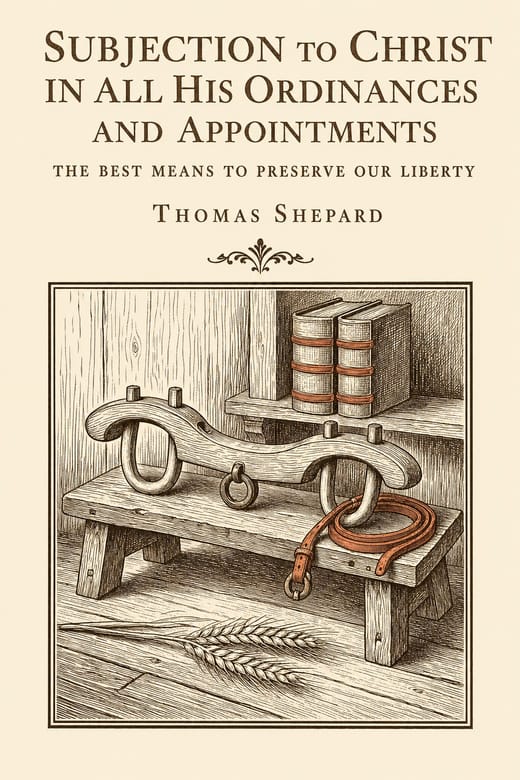
1. A right understanding and sober use of liberty. For when people come first out of bondage, they are apt to be not only somewhat fond of their liberties, but to wax giddy and wanton with liberty, and instead of shaking off the bloody yokes of men, to cast off at least in part the government and blessed yoke of Christ also. Hence it comes about, that a day of rest from persecution, which should be a day of liberty to the Saints to serve God, may become a day of great seduction, and of liberty to seducing spirits, to deceive, and damn, and mislead them from the truths and ways of God. But the machinations of men, though in conjunction with the powers and gates of hell, shall certainly fall at last before Truth and Prayer. And of this is the first Treatise which is seasonably published.
To be fast bound to the rule with all the bonds and cords of God and man is the perfection of liberty. Hence there is not a surer cornerstone of ruin to a Christian Commonwealth, that God will break them with unparalleled destructions by some overflowing scourge, when the day of vengeance is in his heart, than to think that religion is none of their liberties, and yet how many sons of Belial, are there void of counsel, neither is there any understanding in them, who imagine vain things, and say, Let us break his bands asunder, and cast away his cords from us? How do men run into extremes, either stretching and paring every one to the giant's bed, and thereby denying liberty to the Saints to serve him, according to the measure of their stature in Christ, or else on the other hand opening the door so wide, as to plead for liberty to all the disguised enemies and sins against Christ, thereby instead of uniting the Saints in one, endeavouring though a dreadful mistake to unite Christ and Belial? It is a sad thing when a man is come to this pass, that he is not able to resolve his conscience whether Baal be God, or the Lord be God, and therefore would not have the worshippers of Baal punished, for fear lest Baal should be God. Is liberty nothing but indifferency and irresolution of spirit in the things of God? Woe to the valley of vision, even to a sinful nation laden with iniquity, and led away from the truth as it is in Jesus, and to the host of the high ones that sit on high, in the day of his visitation, if this be the spirit of these times; for in the day when he visits, God will visit for these things.
2. That his Word, especially the Word of his Gospel, may be precious and powerful, may run and be glorified in England. Alas! as there is much preaching, but few serious, few heart-breaking sermons: so there is much hearing, but little effectual hearing. Men stand like the oaks of Bashan, before the words of the God of Israel, no terror of the Lord, no news of everlasting destruction, no evidence of the fierce anger of God upon them, which burns down to the bottom of hell, can take hold upon their spirits, or awaken their consciences, to make inquiries after God in this their day: yes if the bars of the pit of hell were broken, and if the devils of hell should come flying up among us, in our solemn assemblies, from the fiery corners of the pit below, with everlasting burnings about their ears, and with chains of darkness rattling at their heels, they might fright men out of their wits perhaps, or from the acts of sin it may be for a time, but it would not work upon their hearts, their desperate, dead, besotted hearts. The fools in Israel will have their swinge in their lusts, and go to hell in a full career, let God do his best. Oh the hardness of men's hearts! And the main reason of it, is because they hear but a sound of words, but they do not hear the Lord in that Word: they hear words that are spoken by God, but they hear not, they see not God himself therein. If ever you would profit by reading or hearing, take every word as a special message to you from God; and of this fruitless hearing, and the rules of hearing aright is the other Treatise.
3. Conscience of his Sabbaths. Of which there is an elaborate discourse of this Author, formerly published by himself. Therefore we shall add no more. The blessing of heaven go with these, to make us a willing people in the day of his power, to submit to his Word, and to come under the wing of the Government of Jesus Christ, as esteeming these spiritual mercies our best mercies, our choicest and dearest liberties. If ever the Lord Jesus (which mercy forbid) should take his doleful and final farewell of the English Nation, as when he laid the tomb-stone upon Jerusalem, such as these will be his mournings over us: Oh Jerusalem, Jerusalem, you that kills the Prophets and burns them that are sent to you, as they did in the time of Popery, how often would I have gathered your children together (by my Word and Spirit therein) even as a hen gathers her chickens under the wings (of my special Government and Protection?) but you would not; behold your house is left to you desolate. But the Lord who does not only make the day dark with night, but also turns the shadow of death into the morning, even the Lord avert these evils, and the Lord make the English Nation his Hephzibah, and the land Beulah, which is the prayer of his mourners in Zion, and of
Your Servants in Jesus, and for Jesus sake, William Greenhill. Samuel Mather.